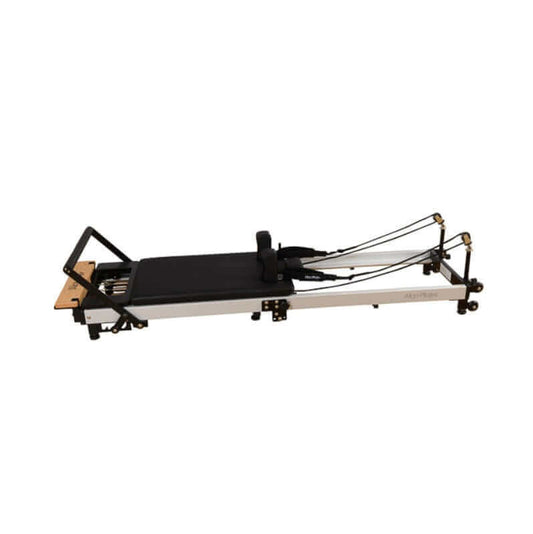


You recently viewed
Shop Our Featured Collections


Trending Products
-
Rehab Free Shipping


Elina Pilates Reformer Master Instructor Physio with Tower
Vendor:Elina PilatesRegular price $6,490.00Unit price per -
Studio Free Shipping


Elina Pilates Master Instructor Wooden Reformer with Tower
Vendor:Elina PilatesRegular price $5,990.00Unit price per -
Align Pilates M8-Pro Half Cadillac Bundle Reformer
Vendor:Align PilatesRegular price $5,990.00Unit price per -
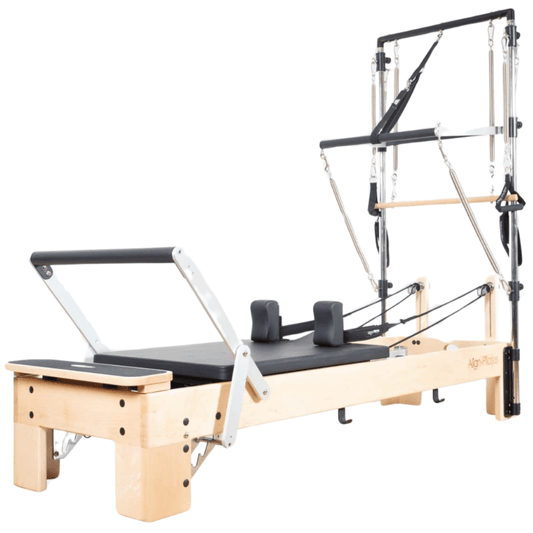
Align Pilates C8-S Pro Half Cadillac Bundle Reformer
Vendor:Align PilatesRegular price $5,625.00Unit price per




-
Studio Free Shipping


Elina Pilates Wood Reformer Machine
Vendor:Elina PilatesRegular price $3,585.00Unit price per -
Align Pilates C8 Pro Reformer Machine
Vendor:Align PilatesRegular price Starting at $2,740.00Unit price per -
Studio Free Shipping


Elina Pilates Wooden Reformer Lignum
Vendor:Elina PilatesRegular price $3,190.00Unit price per -
Studio Free Shipping

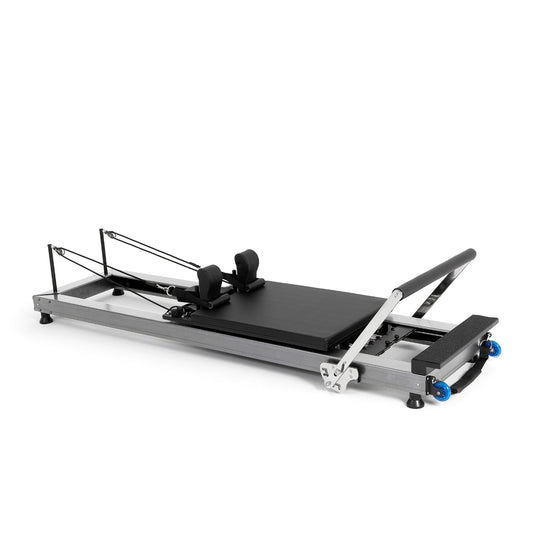
Elina Pilates Aluminium Reformer Machine
Vendor:Elina PilatesRegular price Starting at $3,745.00Unit price per




-
Studio Free Shipping

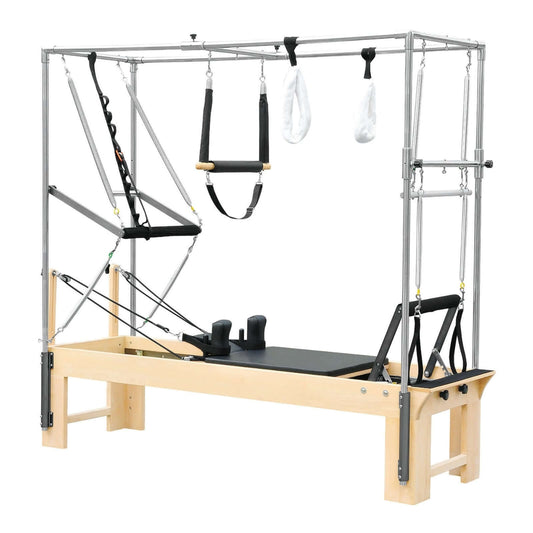
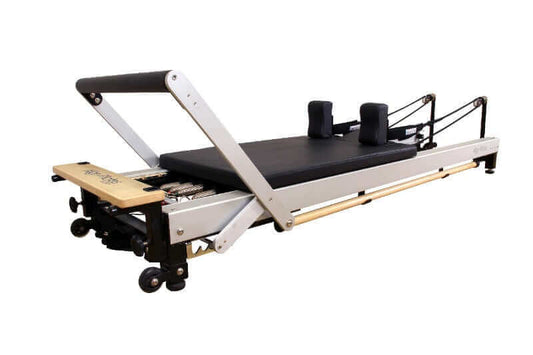
Elina Pilates Cadillac Reformer Machine
Vendor:Elina PilatesRegular price $5,250.00Unit price per -
Studio Free Shipping

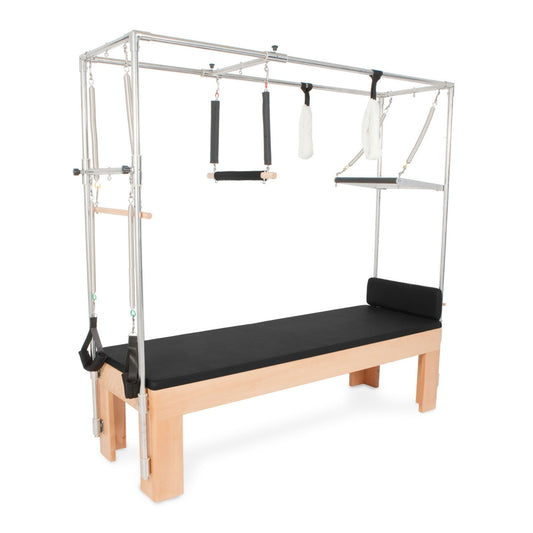
Elina Pilates Cadillac Trapeze Table
Vendor:Elina PilatesRegular price $3,995.00Unit price per -
Studio Free Shipping


Elina Pilates Classic Aluminium Cadillac
Vendor:Elina PilatesRegular price $4,990.00Unit price per -
Studio Free Shipping


Elina Pilates Elite Cadillac Reformer Machine
Vendor:Elina PilatesRegular price $5,995.00Unit price per


Pilates Reformers FAQs
What is a Pilates reformer?
A Pilates Reformer is an exercise machine with a sliding carriage, springs, ropes, and pulleys mounted on a wood or aluminum frame. The Pilates Reformer is the most widely used apparatus in studio Pilates because the reformer adapts mat exercises into spring-loaded resistance work. According to Joseph Pilates, who invented the reformer in the 1920s, the machine was originally designed to rehabilitate injured WWI soldiers using hospital bed frames and springs.
Step 1: load 1 to 5 springs to set the resistance level. Step 2: lie, sit, kneel, or stand on the carriage. Step 3: push or pull against spring tension to slide the carriage along the rails. Finally, swap springs and foot positions to target different muscle groups.
For example, premium reformers using Elina Pilates wood frames or BASI Systems aluminum builds support over 200 exercises and cost $2,000 to $8,000 in studio configurations.
How does the Pilates reformer work?
A Pilates Reformer is a spring-loaded exercise machine with a sliding carriage on a roughly 8-foot by 2-foot frame. The reformer works by combining a padded sliding carriage, 3 to 5 adjustable springs, an adjustable footbar, long straps with handles, and a headrest with shoulder blocks. According to Joseph Pilates, who invented the machine in the 1920s, the reformer was designed to support over 200 distinct exercises.
Step 1: lie, sit, kneel, or stand on the carriage. Step 2: load 3 to 5 springs to set the resistance level. Step 3: push or pull the carriage against spring tension. Finally, hold each contraction for 4 to 8 seconds to maximize muscle recruitment.
For example, practitioners using Elina Pilates and BASI Systems reformers can perform classic moves such as footwork, the hundred, and long stretch on machines costing $2,000 to $8,000.
Can Pilates reformer build muscle?
A Pilates Reformer is a spring-loaded resistance machine designed to build lean, functional muscle through progressive load and time under tension. Reformer training is effective for building muscle because reformer springs scale from roughly 5 pounds to 200 pounds of resistance across 4 to 5 calibrated coils. Research shows eccentric loading on reformers recruits up to 30% more muscle fibers than concentric-only training.
Step 1: load light springs and master form. Step 2: progressively increase resistance over 6 to 8 weeks. Step 3: train 3 times per week for visible results. Finally, vary foot positions and strap angles to recruit every major muscle group.
For example, customer feedback from practitioners using Elina Pilates Elite Wood reformers and BASI Systems studio machines shows visible tone in arms, legs, and core after 8 weeks of practice. Reformer Pilates builds lean muscle without the joint stress of free weights.
Is reformer Pilates good for losing weight?
Reformer Pilates is an effective tool for losing weight because reformer training combines calorie burn with lean muscle building. A 50-minute reformer session burns roughly 250 to 450 calories depending on intensity, body weight, and class style. Research shows resistance training raises resting metabolic rate by 5% to 7% over 8 to 12 weeks of consistent practice.
Step 1: train on a reformer 3 to 4 times per week. Step 2: combine reformer Pilates with a moderate calorie deficit. Step 3: eat 0.7 to 1.0 grams of protein per pound of body weight. Finally, track body composition over 8 to 12 weeks rather than the scale.
For example, a beginner using Align Pilates A8 or Elina Pilates Aluminum reformers can expect visible body composition changes within 12 weeks. Studio sessions cost $60 to $120 per class.
What is a Pilates Cadillac reformer?
A Pilates Cadillac Reformer is a hybrid Pilates apparatus that combines a traditional reformer carriage with an overhead trapeze table frame. The Cadillac Reformer is a single piece of equipment because the cadillac frame mounts directly above the reformer rails on a shared base. According to Joseph Pilates, who developed the original Cadillac in the 1940s, the design was inspired by hospital bed frames used during patient rehabilitation.
Step 1: use the lower carriage for classic reformer footwork and arm work. Step 2: load the overhead push-through bar for spinal mobility exercises. Step 3: attach the trapeze straps for arm and leg suspension training. Finally, fold or lock the cadillac frame for storage.
For example, premium combos using Elina Pilates Elite Wood or BASI Systems Cadillac configurations support over 250 exercises and cost $5,000 to $12,000 in studio-grade builds.
What is a reformer with tower?
A Pilates Reformer with Tower is a standard reformer that has an upright tower frame mounted at the head end for added spring-loaded exercises. The reformer-with-tower setup is popular for home studios because the tower frame supports roughly 75% of full Cadillac exercises in a smaller footprint. According to Pilates studio designers, the tower attachment was created as a space-efficient alternative to the full Cadillac.
Step 1: practice classic reformer footwork on the carriage. Step 2: stand or kneel on the carriage and use the tower springs for arm work. Step 3: attach the push-through bar for spine extension and roll-down exercises. Finally, remove the tower for traditional reformer-only sessions.
For example, home setups using Align Pilates A8 or Elina Pilates wood reformers with towers cost $2,500 to $5,500 and fit in a 9-foot by 3-foot footprint.
What is a Pilates Chair?
A Pilates Chair is a compact box-shaped Pilates apparatus with a padded seat and adjustable spring-loaded pedals. The Pilates Chair is also called the Wunda Chair because the original design was patented as a dual-purpose furniture chair. According to Joseph Pilates, who designed the Wunda Chair in the 1940s, the chair was meant to function as living room furniture during the day and exercise equipment at night.
Step 1: sit or stand on the chair seat to load the pedals. Step 2: press the pedals down with hands or feet against spring tension. Step 3: progress to standing balance work and inverted exercises. Finally, vary spring loads to scale resistance from light to heavy.
For example, studio-grade Wunda Chairs using Elina Pilates and BASI Systems frames cost $700 to $1,500 and support over 80 distinct exercises.
Why buy a Pilates Reformer over a mat?
A Pilates Reformer is a better investment than a mat for practitioners seeking faster strength gains, scalable resistance, and more exercise variety. Reformer training is more effective than mat-only practice because reformer springs add 5 to 200 pounds of variable resistance to every exercise. Research shows resistance training builds muscle roughly 30% faster than bodyweight training over an 8-week program.
Step 1: practice 200 reformer exercises versus roughly 60 traditional mat exercises. Step 2: scale resistance from rehab-light to athlete-heavy by swapping springs. Step 3: train safely after injury because the reformer carriage supports body weight. Finally, progress to standing and kneeling work for advanced sessions.
For example, practitioners using Elina Pilates Elite Wood or Align Pilates A8 reformers report visible strength gains within 8 weeks. Studio reformer sessions cost $60 to $120 each, so a home reformer pays for itself within 6 months.
How much does a Pilates Reformer cost?
A Pilates Reformer is a long-term fitness investment ranging in price from roughly $400 for entry-level home models to $8,000 for studio-grade premium machines. Pilates Reformer prices vary because spring quality, frame material, carriage padding, and brand reputation all factor into manufacturing cost. According to Pilates retailers, the average home buyer spends $1,500 to $3,000 on a reliable mid-range reformer.
Step 1: budget $400 to $900 for a beginner folding reformer. Step 2: budget $1,500 to $3,500 for a mid-range home reformer with a tower. Step 3: budget $4,000 to $8,000 for a studio-grade wood or aluminum frame. Finally, add $200 to $500 for jump boards and box accessories.
For example, popular models using Align Pilates A8 frames sell in the $1,500 to $2,500 range, and BASI Systems studio frames sell in the $3,500 to $5,500 range. Premium options using Elina Pilates Elite Wood frames cost $4,500 to $7,500.
Which Pilates Reformer should I buy?
The best Pilates Reformer is a machine matched to the buyer's available space, budget, fitness level, and intended use case. Choosing a reformer is a personal decision because home practitioners, studio owners, and rehabilitation patients each need different features. According to Pilates instructors, the most common buyer mistake is overspending on studio-grade equipment for casual home use.
Step 1: define the available floor space and ceiling height. Step 2: set a realistic budget between $500 and $8,000. Step 3: choose a frame material such as wood, aluminum, or steel. Finally, match the spring system to the practitioner's strength level and goals.
For example, beginners using Align Pilates F3 folding reformers in small home studios typically spend roughly $1,500. Commercial studio owners using Elina Pilates Elite Wood or BASI Systems Cadillac configurations typically spend $5,000 to $10,000 per machine.
What Pilates equipment do I need?
Essential Pilates equipment is a combination of a Pilates Reformer, a quality mat, and 1 to 3 small accessories such as a magic circle, foam roller, and resistance band. A complete home Pilates setup is built around the reformer because the reformer supports over 200 exercises across all difficulty levels. According to Pilates studios, most home practitioners start with a reformer plus mat and add accessories within 6 months.
Step 1: buy a Pilates Reformer for $500 to $5,000 depending on use case. Step 2: add a 0.5-inch thick Pilates mat for floor work. Step 3: add a magic circle, foam roller, and resistance bands for $30 to $80 each. Finally, consider a Wunda Chair or spine corrector once foundational practice is established.
For example, a typical home setup using Align Pilates A8 plus accessories costs $2,200 to $3,500 in total.
How to use Pilates equipment?
Using Pilates equipment is a structured process that begins with proper setup, certified instruction, and progressive load management. Pilates equipment is most effective when practitioners learn proper form before adding resistance because incorrect setup reduces results and can cause strain. According to certified Pilates instructors, beginners typically need 3 to 5 sessions to learn safe equipment handling.
Step 1: read the manufacturer setup guide for the specific reformer or chair. Step 2: practice with a certified instructor for the first 3 to 5 sessions. Step 3: start with light spring loads and master form before increasing resistance. Finally, log workouts and review progress every 2 to 4 weeks for measurable results.
For example, beginners using Elina Pilates and BASI Systems reformers should expect 4 to 8 weeks of guided instruction. Studio sessions cost $60 to $120 each, so guided home practice is the most cost-effective path.
What is the best Pilates equipment?
The best Pilates equipment is a Pilates Reformer for most home practitioners because the reformer supports the widest range of exercises and resistance levels. A reformer is the most versatile single Pilates apparatus because reformer springs and accessories adapt to beginner, intermediate, and advanced training. According to Pilates studio surveys, the reformer is the most-used machine in over 80% of professional studios.
Step 1: prioritize a Pilates Reformer for the foundational equipment purchase. Step 2: add a Wunda Chair for balance and unilateral strength work. Step 3: add a Cadillac or tower for spinal mobility and overhead exercises. Finally, complete the setup with mats and small props.
For example, studio-grade reformers using Elina Pilates Elite Wood or BASI Systems frames cost $5,000 to $10,000 each, while home models using Align Pilates start at $1,500.
Where can I buy Pilates equipment?
Pilates equipment is best purchased from authorized brand retailers, certified online dealers, or directly from major manufacturers such as Elina Pilates, Align Pilates, and BASI Systems. Authorized dealers are the most reliable purchase channel because authorized dealers carry full manufacturer warranties and genuine replacement parts. According to industry analysts, roughly 15% of online Pilates equipment listings are unauthorized resales without warranty coverage.
Step 1: identify an authorized dealer for the chosen brand. Step 2: confirm the dealer offers insured delivery and damage protection. Step 3: verify the warranty length with the manufacturer. Finally, buy from a US-based fulfillment partner for fastest delivery.
For example, Pilates Elegance ships authentic Elina Pilates, Align Pilates, and BASI Systems reformers with insured delivery, a price guarantee, and damage protection on every order. Reformers cost $400 to $8,000 depending on model, brand, and configuration.
Can beginners use a Pilates Reformer?
A Pilates Reformer is a beginner-friendly machine because reformer springs are adjustable from light to heavy resistance. Reformer training is suitable for new practitioners who learn proper form with a certified instructor. According to Joseph Pilates and modern certified studios, beginners typically progress through three stages over 8 to 12 weeks.
Step 1: meet a certified instructor 3 times to learn footwork, the hundred, and leg circles. Step 2: continue 2 sessions per week for 4 to 8 weeks, adding strap work and bridging. Step 3: introduce kneeling and standing exercises by week 8. Finally, transition to home practice once form is reliable.
For example, a beginner using Align Pilates A8 or Elina Pilates Wood reformers can practice safely at home after 12 weeks of guided instruction. Studio sessions in the US cost $60 to $120 each, so a home reformer often pays for itself within 6 months.
Are there any health benefits to using a Pilates Reformer?
A Pilates Reformer is a low-impact resistance machine with documented health benefits for flexibility, strength, posture, balance, and injury rehabilitation. Reformer training is effective for general health because reformer training combines strength, mobility, and core control in a single 50-minute session. Research shows regular Pilates practice reduces chronic low-back pain by roughly 30% over 12 weeks of consistent training.
Step 1: train on a reformer 2 to 3 times per week for measurable strength gains. Step 2: focus on core engagement during every exercise. Step 3: progress from light to medium spring resistance over 6 to 8 weeks. Finally, combine reformer practice with daily walking or low-impact cardio.
For example, physiotherapists using Elina Pilates and BASI Systems reformers prescribe reformer training for post-injury rehabilitation. Sessions at certified studios cost $60 to $120 each.
How often should I use a Pilates Reformer?
The recommended frequency for using a Pilates Reformer is 2 to 4 sessions per week for most adult practitioners. Reformer training frequency is a balance between recovery and progression because muscles need 24 to 48 hours of recovery between resistance sessions. According to Pilates instructors, beginners typically start at 2 sessions per week and progress to 3 or 4 within 6 to 8 weeks.
Step 1: train on a reformer 2 times per week for the first month. Step 2: add a third session in week 5 once form is established. Step 3: progress to 4 times per week for advanced strength and conditioning goals. Finally, schedule rest days between heavy spring sessions.
For example, recreational practitioners using Align Pilates and Elina Pilates home reformers typically train 3 times per week. Studio sessions cost $60 to $120 each.
What should I wear when using a Pilates Reformer?
Proper Pilates Reformer attire is a combination of form-fitting athletic clothing and grip socks with non-slip soles. Loose fabric is a known safety hazard on reformer machines, because loose fabric can catch in springs, straps, or the moving carriage. The right attire matters for every reformer brand, including Elina Pilates, Align Pilates, and BASI Systems.
Step 1: wear a fitted tank or moisture-wicking tee. Step 2: choose leggings or knee-length shorts to protect skin from upholstery friction. Step 3: add certified grip socks, which most US studios require for safety. Finally, remove jewelry, watches, and belts before each session.
For example, a quality pair of grip socks costs $12 to $25 and lasts roughly 200 sessions. Tie back long hair before using Elina Pilates or Align Pilates equipment. Hydrate before class and bring a small towel for grip on the shoulder rests.
Brands


-

Commercial Sales
Learn moreContact our Pilates Elegance Commercial Advisors to get the best products and pricing for your studio's needs.
-

Contact Us
Get startedPilates Elegance Advisors are standing by
9:00 am - 6:00 pm ET weekdays, and 10:00 am - 4:00 pm ET weekends.


Recent Pilates Blog Posts
-

The Difference Between Pilates Reformers and Ca...
If you’re considering investing in Pilates equipment, you may find yourself torn between the Pilates reformer and the Cadillac reformer. Both pieces are incredibly versatile and effective, but they serve...
The Difference Between Pilates Reformers and Ca...
If you’re considering investing in Pilates equipment, you may find yourself torn between the Pilates reformer and the Cadillac reformer. Both pieces are incredibly versatile and effective, but they serve...
-

Discover the Benefits of Pilates Cadillac Refor...
The Pilates Cadillac reformer is the ultimate tool for enhancing your Pilates practice. With its robust design and countless exercise possibilities, the Cadillac reformer is perfect for anyone seeking to...
Discover the Benefits of Pilates Cadillac Refor...
The Pilates Cadillac reformer is the ultimate tool for enhancing your Pilates practice. With its robust design and countless exercise possibilities, the Cadillac reformer is perfect for anyone seeking to...
-

How to Stay Consistent with Your Pilates Practice
Building a consistent Pilates routine can transform your fitness, posture, and overall well-being. But staying consistent isn’t always easy, especially with busy schedules or life’s unexpected twists. Whether you’re practicing...
How to Stay Consistent with Your Pilates Practice
Building a consistent Pilates routine can transform your fitness, posture, and overall well-being. But staying consistent isn’t always easy, especially with busy schedules or life’s unexpected twists. Whether you’re practicing...


Don't Miss Our Best Sellers!
-
Home Free Shipping


Elina Pilates Domo Reformer – Black Edition
Vendor:Elina PilatesRegular price $1,490.00Unit price per -
Align Pilates R8 Pro Pilates Reformer Machine
Vendor:Align PilatesRegular price $2,000.00Unit price per -
Align Pilates F3 Folding Home Reformer Machine
Vendor:Align PilatesRegular price $2,490.00Unit price per -
Home Free Shipping


Elina Pilates Nubium Reformer – Black Edition
Vendor:Elina PilatesRegular price $3,190.00Unit price per